How to choose the right solar mounting structure
Solar panels are supported by mounting structures when installed. A solar mounting structure holds them in place while ensuring the correct tilt and orientation for maximum sunlight exposure. Choosing the right mounting structure is very important because it affects the system’s performance, lifespan, energy output, and resistance to environmental factors such as wind, rain, and heat and contributes to its overall performance.
In this blog, we will discuss the key factors to consider when selecting the right solar mounting structure for your project in India.
The choice of the right solar mounting structure depends on a lot of factors, such as the amount of energy needed, available space, budget, and several other points that need to be considered along with these.
- Type of Solar structure:
The first step in choosing a solar mounting structure is identifying the type of solar installation. There are various types of Solar structures.
1.1. Rooftop Solar Systems
Rooftop solar structures are most commonly used in residential, commercial, and industrial buildings. These systems are installed on building roofs using specialized mounting structures designed for different roof types.
Common rooftop structures include:
Flat roof-mounted structures
Tilted roof-mounted structures
Pole-mounted and tracking structures
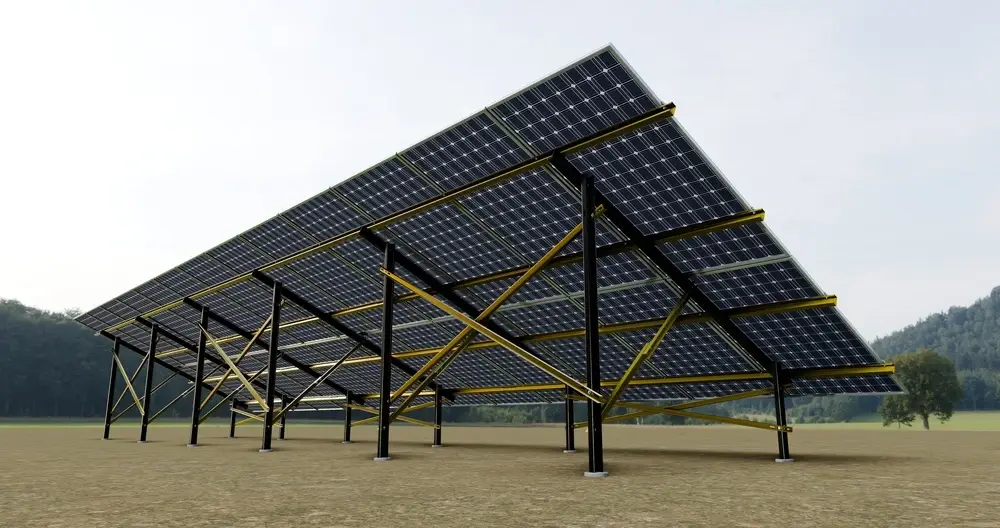
1.2. Ground-Mounted Solar Systems
Ground-mounted systems are used for large-scale solar projects such as solar parks, farms, and industrial projects. These structures are installed directly on the ground using strong foundations; hence they are called ground-mounted structures.
Ground-mounted structures mostly use:
Fixed tilt structures
Seasonal tilt structures
Solar tracking systems
Determine the most suitable mounting structure for your place as per your specific needs and choose which mounting structure you want to invest in accordingly.
- Consider the Material of the Mounting Structure
The material used in solar mounting structures plays a major role in durability, strength, and corrosion resistance.
2.1. Galvanized Iron (GI)
Galvanized iron is one of the most used materials for making solar mounting structures in India. It is strong, durable, and resistant to rust because it is coated with zinc, which makes it durable.
Galvanized Iron in solar mounting structures has many benefits, such as :
Long lifespan
Cost-effective solution
High structural strength
2.2. Aluminium
Aluminium mounting structures are lightweight and corrosion-resistant. They are often used in rooftop solar installations.
Aluminium in solar mounting structures has many benefits, such as :
Easy installation
Low maintenance
Excellent corrosion resistance
2.3. Stainless Steel
Stainless steel components are sometimes used for fasteners and connectors because of their high durability and corrosion resistance.
Selecting the right material ensures the solar system’s long-term reliability.
Comments
Post a Comment